
Track Record and Impact
Throughout its 26 years of existence, Pusham UII has contributed to strengthening the civil society movement and solidarity, as well as to the fulfillment and protection of human rights in Indonesia. Together with our partners, Pusham UII works to promote human rights principles in the public discourse, build human rights capacity among civil society and state actors, and call for human rights accountability from the state and corporations.
1. Mainstreaming Human Rights Knowledge
Pusham UII has conducted more than 1,200 human rights capacity-building programs. For civil society, these activities aim to strengthen social movements and solidarity in asserting civic space and human rights. For state actors, human rights capacity-building aims to ensure that state actors comply with human rights standards to fulfill and protect the rights of every individual. To date, the beneficiaries of these human rights capacity-building initiatives include academics at universities throughout Indonesia, civil society communities and organizations, as well as instructors, educators, and trainers at formal education centers within law enforcement institutions, and correctional officers in Indonesia. Through measurable capacity-building interventions, these initiatives have successfully:
- Established a network of human rights educators across Indonesia that produces dozens of publications each year and educates thousands of students—the future generation—on human rights approaches and democratic principles.
- Contributed to preventing a culture of violence and strengthening the principle of due process of law in law enforcement.
- Has established an inclusive correctional system for vulnerable groups, particularly persons with disabilities, through the services and governance of the Correctional Technical Implementation Units (UPT) that meet standards for adequate accommodation and etiquette in interacting with vulnerable groups.
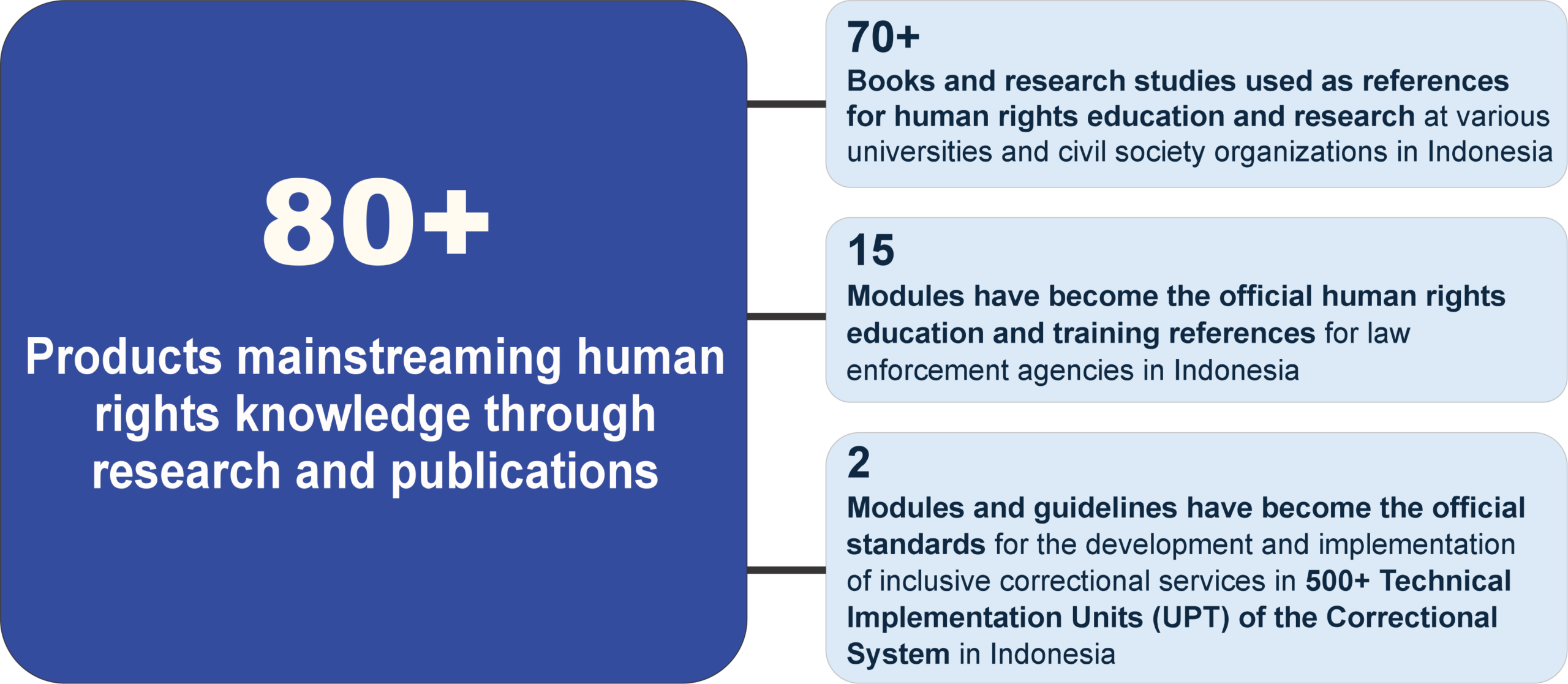
Pusham UII has published more than 80+ mainstreaming human rights knowledge products through research and publications. Through books, research reports, modules, and guideline documents, Pusham UII has established human rights as a standard in public discourse and civil society movements, a driving force behind education and training, and a framework for ensuring state institutions’ compliance with human rights standards. To date, the research and publications produced have:
- Influencing public discourse through citations and references in national and international media.
- To serve as a model for higher education transformation through its use in human rights education and research at various universities in Indonesia.
- To serve as a point of reference for civil society in safeguarding the trajectory of policies on democracy and human rights.
- To serve as an evidence-based reference for judicial reform through its use in education and training, as well as in the implementation of state institutions’ functions.
2. Human Rights Capacity Building
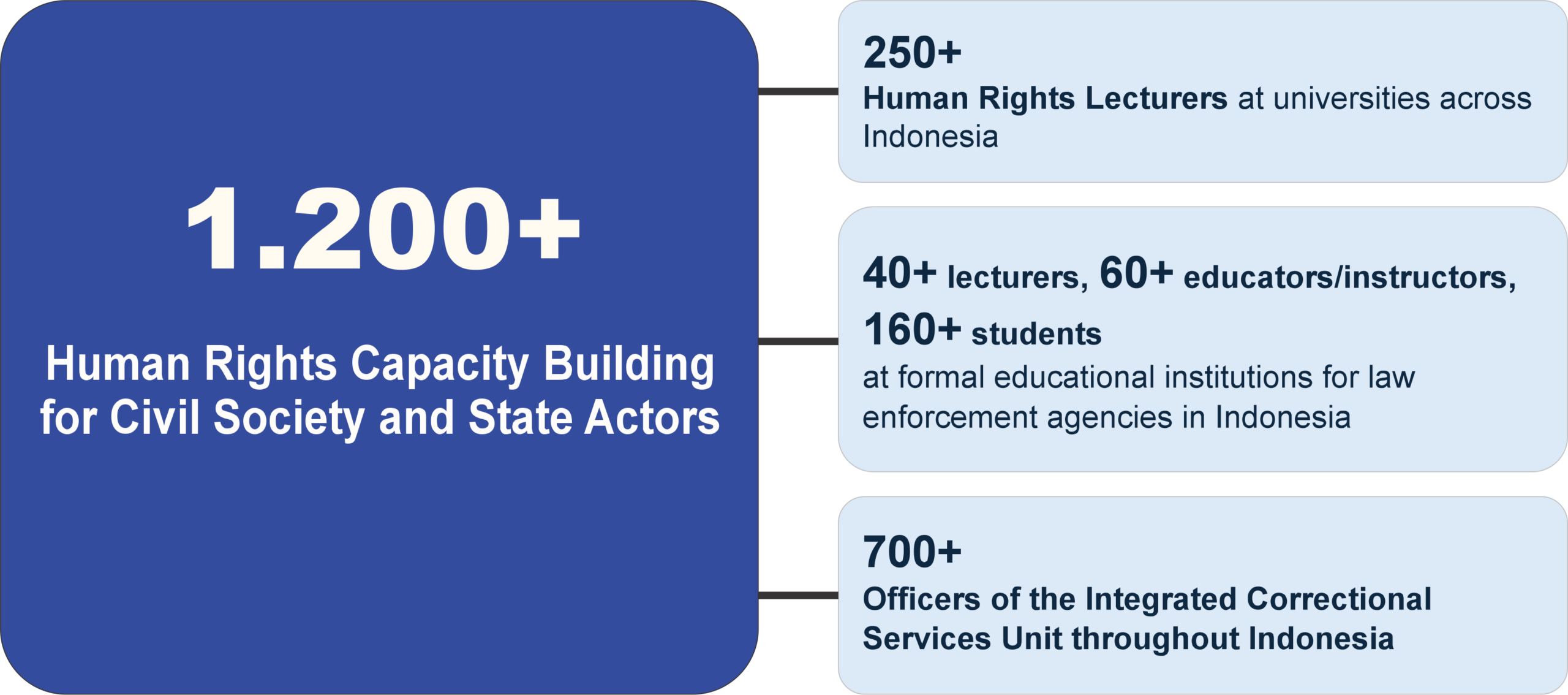
Pusham UII has conducted more than 1,200 human rights capacity-building programs. For civil society, these activities aim to strengthen social movements and solidarity in asserting civic space and human rights. For state actors, human rights capacity-building aims to ensure that state actors comply with human rights standards to fulfill and protect the rights of every individual. To date, the beneficiaries of these human rights capacity-building initiatives include academics at universities throughout Indonesia, civil society communities and organizations, as well as instructors, educators, and trainers at formal education centers within law enforcement institutions, and correctional officers in Indonesia. Through measurable capacity-building interventions, these initiatives have successfully:
- Established a network of human rights educators across Indonesia that produces dozens of publications each year and educates thousands of students—the future generation—on human rights approaches and democratic principles.
- Contributed to preventing a culture of violence and strengthening the principle of due process of law in law enforcement.
- Has established an inclusive correctional system for vulnerable groups, particularly persons with disabilities, through the services and governance of the Correctional Technical Implementation Units (UPT) that meet standards for adequate accommodation and etiquette in interacting with vulnerable groups.
3. Strengthening Civil Society Movements and Solidarity, and Human Rights Institutional Capacity
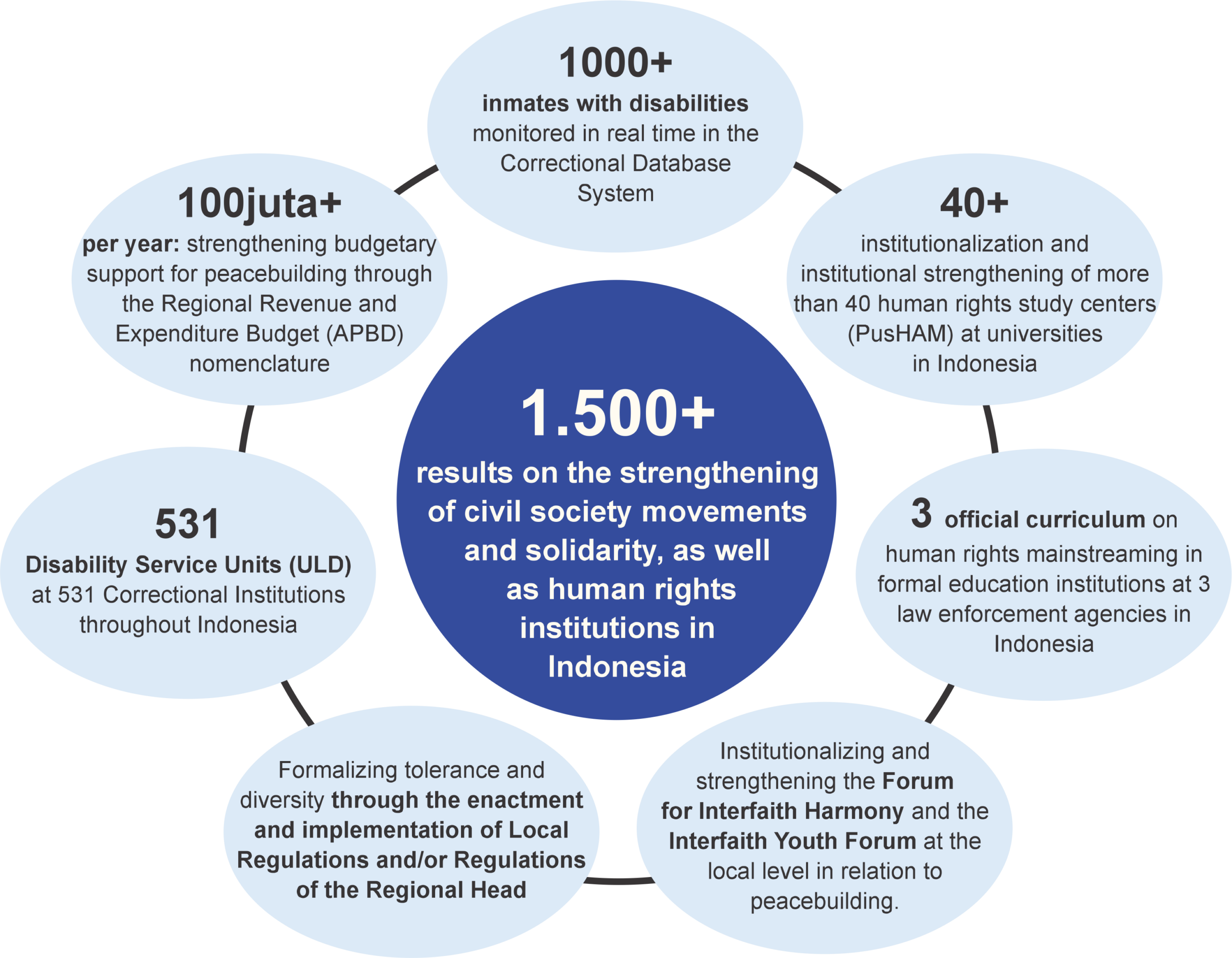
Pusham UII has contributed to more than 1,500 outcomes that have strengthened the civil society movement and solidarity, as well as human rights institutions in Indonesia. Through research support, human rights capacity building, and strong partnerships with civil society organizations and pro-human rights state actors, efforts to strengthen civil society and human rights institutions have been successfully:
- Establishing networks, institutionalizing, and strengthening the institutional capacity of more than 40 human rights study centers at universities in Indonesia that work to mainstream human rights principles and standards in Indonesia.
- Ensuring that more than 1,000 inmates with disabilities are registered and monitored in real time through the Correctional Database System so that the rights of people with disabilities in the correctional system can be fulfilled accurately, in accordance with their diverse circumstances, barriers, and actual needs. This publicly accessible monitoring data can also serve as a reference for civil society, academics, and disability organizations to strengthen the movement and solidarity for the rights of people with disabilities, as well as for the government in maximizing rights-based services for people with disabilities.
- Institutionalize and strengthen the capacity and networks of the Forum for Interfaith Harmony (FKUB) and the Interfaith Youth Forum (FPLA) in Kulon Progo to support peacebuilding efforts, ensuring that a network of young people from civil society serves as a driving force for promoting religious and belief tolerance.
- Advocating for the enactment of Kulon Progo Regent Regulation No. 52 of 2020 on the Establishment of Houses of Worship and Places of Worship, as well as Kulon Progo Regional Regulation No. 13 of 2022 on the Implementation of Social Tolerance, so as to mobilize local resources for peacebuilding efforts.
- Advocating for funding of more than 100 million rupiah per year for peacebuilding efforts in the Kulon Progo Regency Regional Revenue and Expenditure Budget to foster religious and belief tolerance.
- Advocating for changes to the official educational curriculum at law enforcement institutions in Indonesia—namely, the National Police, the Attorney General’s Office, and the Supreme Court—by integrating human rights standards and protections for vulnerable groups in the law enforcement process.
- Establish 531 Disability Service Units (ULD), followed by capacity-building for more than 700 ULD staff members at Correctional Service Units throughout Indonesia, so that specialized units are available to ensure appropriate accommodations and uphold the specific rights of inmates with disabilities during the correctional process.

 EN
 ID